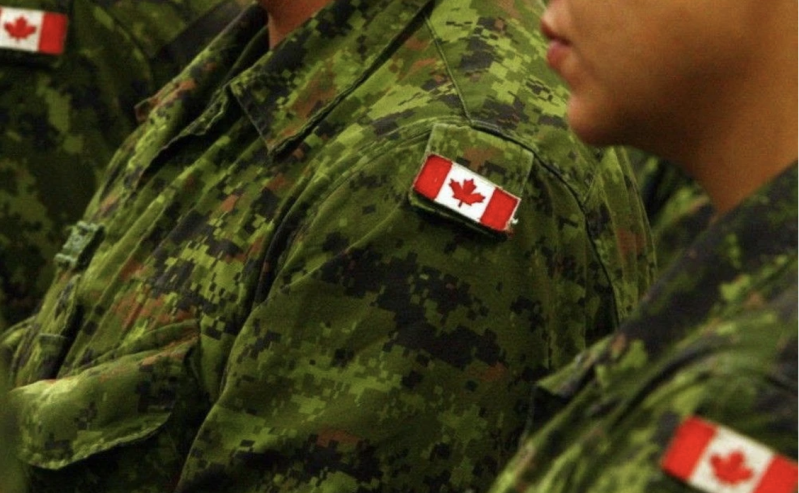
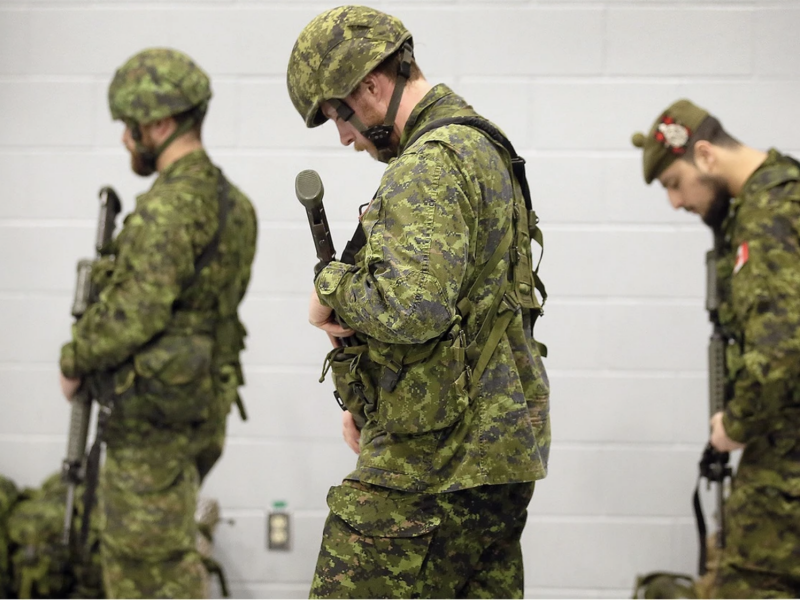
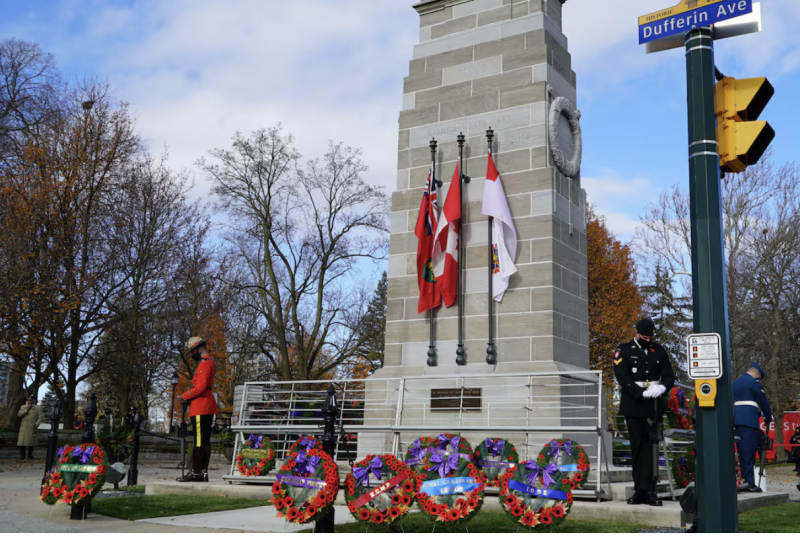
A military reserve unit in southwestern Ontario has imposed a cap on the number of soldiers it is willing to pay to attend Remembrance Day services this year, CBC News has learned.
A series of leaked internal emails involving members of 31 Canadian Brigade show internal budget restraints imposed across the military have forced local commanders to limit paid attendance to 50 troops per unit.
The brigade, which is headquartered at Wolseley Barracks in London, Ont., has 13 units, which are sprinkled across the region, including St. Thomas, Waterloo and Hamilton.
The decision means 650 soldiers out of a total strength of 2,400 can participate in local ceremonies. Troops who contacted CBC News say maximum participation was encouraged in the past.
The reservists normally get a half-day's pay for ceremonial events, said one of the internal emails.
The decision is not going over well among troops, many of whom have reached out to CBC News.
Originally, it seems, the plan had been to fund fewer than 50 soldiers per unit. But in an Oct. 9 internal email, the brigade commander, Col. Blair Ashford, wrote that he had decided to increase the allotment and that it was a "defensible number" because it matched the number of soldiers that turn out for exercises.
He alluded to having to make a final choice between ceremonies and the one day a week of training units are expected to complete.
Talk of cutting training
"We cannot take from other buckets of money/time for ceremonial events — cancelling Thursday nights or weekend training to get time and money for ceremonial events," Ashford wrote.
He added that the continuing budget squeeze could mean "there is also the possibility that we will be cutting Thursday night training as well if we do not get our pressures relieved."
Last month, CBC News reported that the Canadian military was in the midst of another round of internal belt-tightening, despite an enormous influx of cash from the federal government.
It is a combination of past and current budget initiatives colliding with the expectations and demands associated with higher defence spending.
The Department of National Defence was told to focus its billions of extra dollars on priority areas, including the purchase of much-needed new combat equipment.